Media Literacy
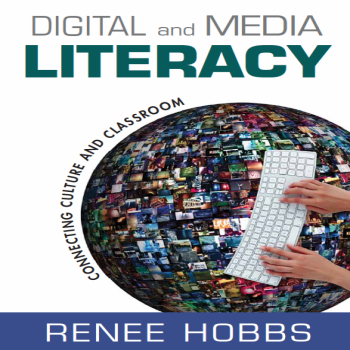
Media literacy is a word thrown around a lot on online spaces. While people seem to have an instinctive understanding of it, they also very easily misunderstand and misuse the term. To me, media literacy is about being critical of the media landscape that surrounds you. It is about taking a step back and thinking about the media that you consume. This includes identifying what types of media you consume, where that media comes from, how much you trust that media, and how that media affects you and the decisions you make.Because of this, I resonated with Renee Hobbs’ 5 competencies, which, according to Hobbs, are “the essential dimensions of digital and media literacy” (Media Education Lab).
 |
| Source |
Hobbs describes the following competencies:
Access: "finding and sharing appropriate and relevant information using media texts and technology tools.”
Analyze: "using critical thinking to analyze message purpose, target audience, quality, veracity, credibility, point of view, and potential effects or consequences of messages."
Create: “composing or generating content using creativity and confidence in self-expression, with awareness of purpose, audience, and composition techniques into the world of digital and media."
Reflect: “applying social responsibility and ethical principles to our own identity, communication behavior, and conduct."
Act: “working individually or collaboratively to share knowledge and solve problems in the family, the workplace, and the community.”
(Robinson)
Access is the skills required for basic research. Knowing what tools are available, how to use them, and what information can be acquired from using those tools is important to good media literacy.
The Analyze competency is what best fit my personal description of media literacy. I do feel this is the most accessible aspect of media literacy, as it is what people initially think when they hear the term. It is a great starting point for teaching media literacy, I think.
Knowing how to Create content will give students insight into how media is designed to appeal to consumers. This competency does remind me of Marshall McLuhan’s phrase, “the medium is the message.” Understanding the medium will ultimately influence the message, for better or for worse. While I believe it is possible for media to have a message on its own, the nature of the medium has the power to enhance or devalue that message.
When it comes to Reflecting, I think it is very easy to misuse this skill. Sometimes, I will see a piece of media, and then project my own beliefs onto to try to understand it. The problem is that I am only really engaging with the message that I think I see rather than the media itself. When reflecting, it is important to try and put yourself in the creator’s shoes to try to understand what their intentions were.
The most powerful message any piece of media can provide is to Act. Consuming media is a relatively passive activity. Taking action is not. It forces people to directly engage with the world around them. Media tends to reinforce specific beliefs, but reality directly challenges those belief. Taking action is about confronting that reality. Librarians and teachers can take action by educating others.
Overall, Renee Hobb’s competencies revolve around the goal of empowering people in a world where they are constantly bombarded with all sorts of media, some genuine, some cynical, and some malicious. In the current world, it seems that it is up to the individual to figure out what is most important to them. Therefore, the goal of librarians, teachers, and other educators should be to empower people to become competent citizens.
Works Cited
1. Robinson, J. Review of Digital and Media Education. https://mediaeducationlab.com/digital-and-media-literacy-education


Hi Evan,
ReplyDeleteEducating our youth in digital citizenship, like you mentioned, is essential go having them be a part of the cyber world. I read Howard Rheingold's, Attention, and Other 21st-Century Social Media Literacies, and he lists similar competencies to Hobb's. The one that stood out to me was critical consumption which seems very similar Hobb's reflect. Rheingold uses Ernest Hemingway's words to describe this competency as "crap detection," which is appropriate I believe when reading what is online. One can never be too careful with what others put out there as the "truth." We do need to educate everyone beginning with our youth on these competencies.
Hi Evan, I think that you make an excellent point about Hobbs's create competency. If students learn what it is like on both ends of making media, both creating it and consuming it, they'll be more aware of what the media they consume is trying to convey to them. Experience is the best teacher and the more one tries to critically examine the media that they are exposed to, the better they will be at it.
ReplyDelete